
HardwareAvailable
Robot Throwoff One
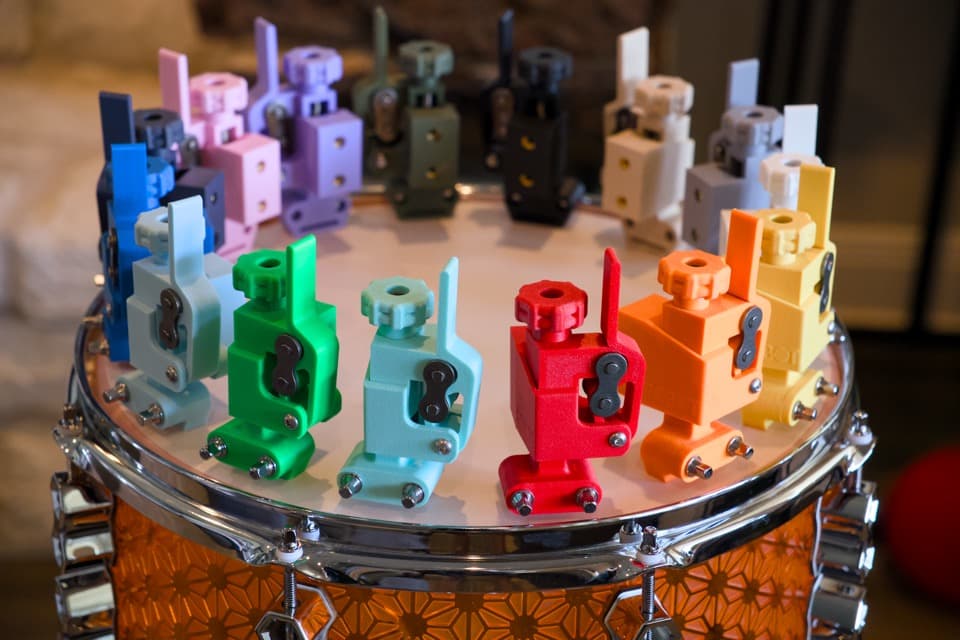
3D-printed composite throwoff with Trick spacing.
View details
Process
An in-depth look at additive manufacturing, CNC, and the production methods that let Robot build drums and hardware in America.
Details
Overview
A small studio can only build serious instruments if design and production stay close to each other. At Robot, additive manufacturing, CNC, and repeatable digital tooling make that possible.
Those methods let us ship 3D-printed lugs, gaskets, throwoffs, and butt plates, manufacture drums and hardware in America, and still protect durability, reliability, and design precision.
DrumBot CNC technology sits at the center of that system.
Additive manufacturing is a production method first. The same workflow we use to prototype also produces finished parts that ship on real drums.
The parts that come out of it are finished parts. Lugs, gaskets, throwoffs, and butt plates can all leave the studio as production hardware, not as placeholders.
Because the same digital pipeline spans prototype and production, a change to interface geometry or material distribution can move from test part to shipped part without changing the manufacturing language around it.
The old split between design and production is expensive. Ideas move slowly once they leave the sketchbook, and the team that imagines the part is often far from the team that makes it.
Modern tools change that. Additive manufacturing, CNC, and digital fixture design let us move from concept to part without losing the logic that made the part interesting in the first place.
That is the same reason a process change can stay inside one manufacturing language: if the geometry is already digital, the transition from printed part to production part is an extension of the same system rather than a reinvention.
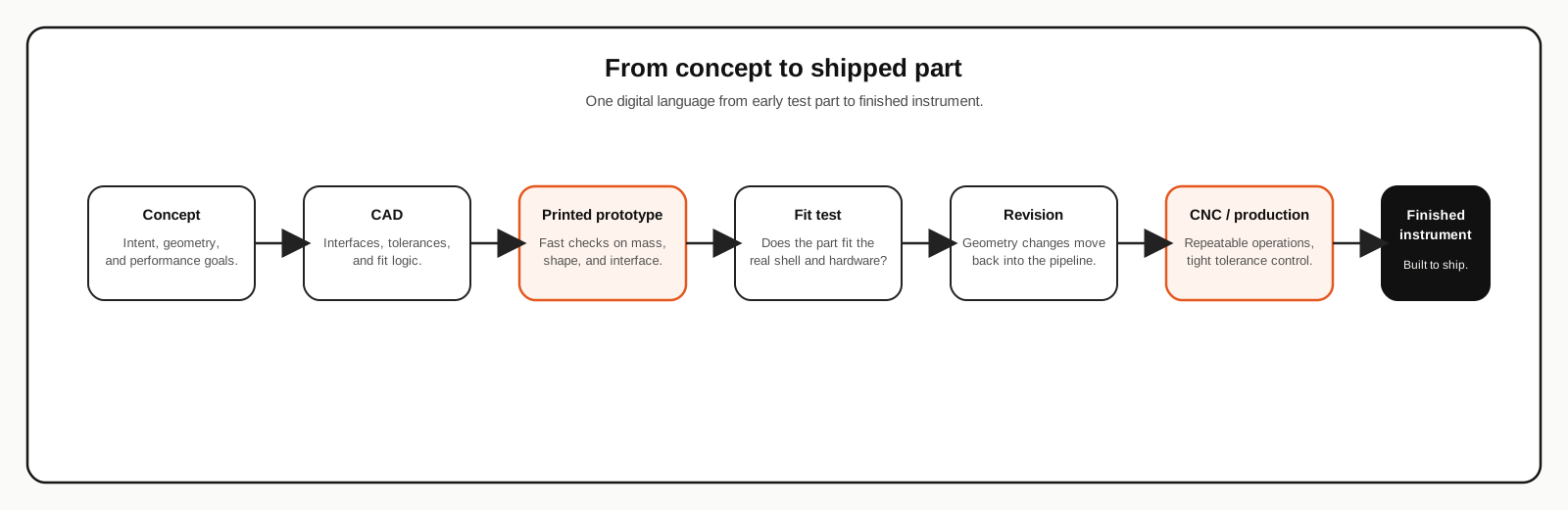
Once a part or shell design is ready, repeatability becomes the next problem. CNC is how we solve it.
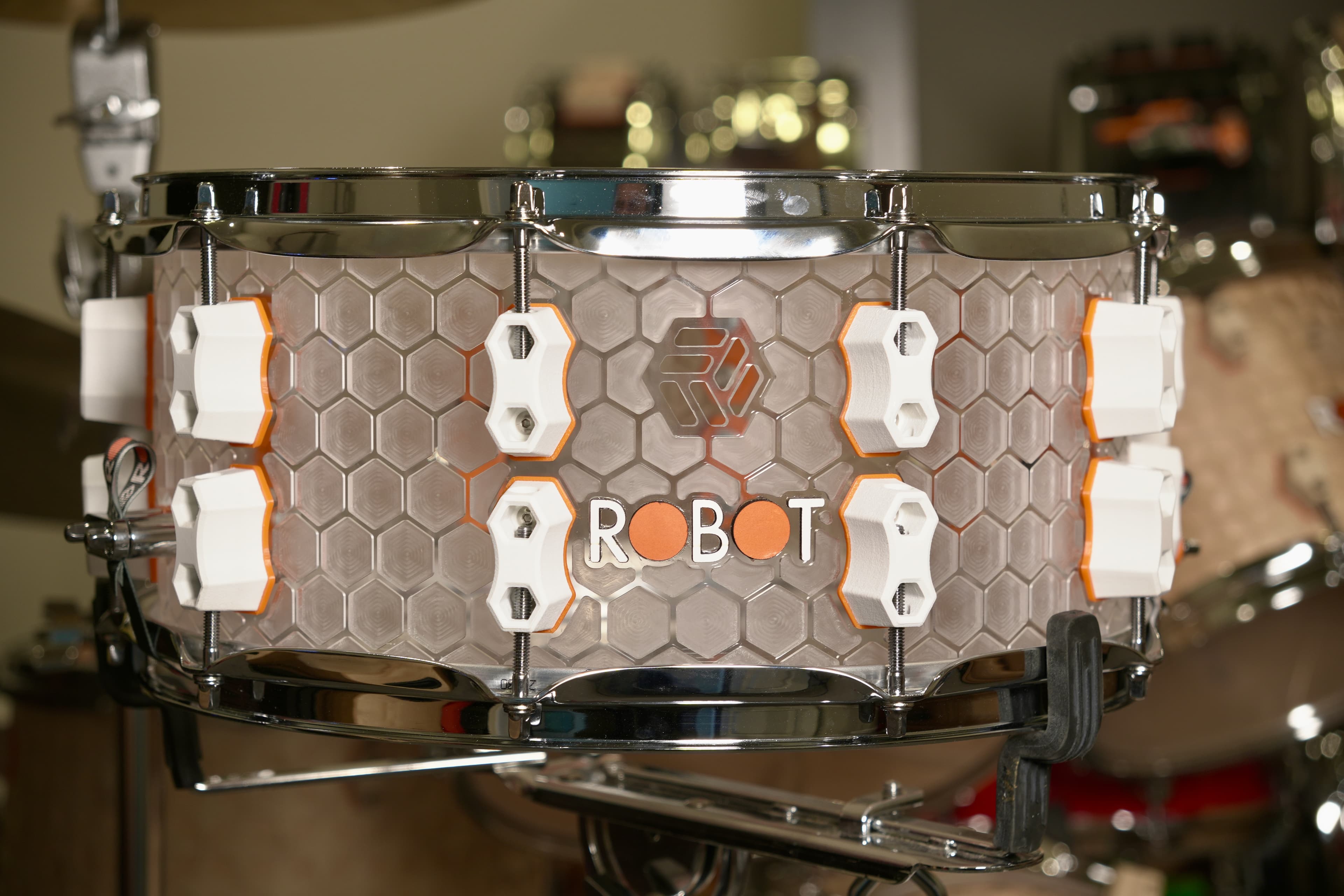
DrumBot CNC technology is central to that loop. It turns geometry into consistent operations, keeps tolerances tight, and lets us manufacture parts that feel the same from one run to the next.
That matters most when a shell feature or hardware interface has to repeat exactly. A design is only as useful as its ability to be made the same way again.
A small studio does not need a massive factory to make a serious instrument. It needs tools that reduce waste, shorten setup, and make small runs viable.
Digital manufacturing gives us that control. It lets us build product in America without the cost structure of a much larger operation, while still keeping the parts durable and the finish work consistent.
Good design does not stop at the rendering. It has to survive transport, humidity, assembly, disassembly, and years of use.
That is why precision matters. Control over geometry, interface fit, material distribution, and finishing is what turns a good idea into an instrument that lasts.
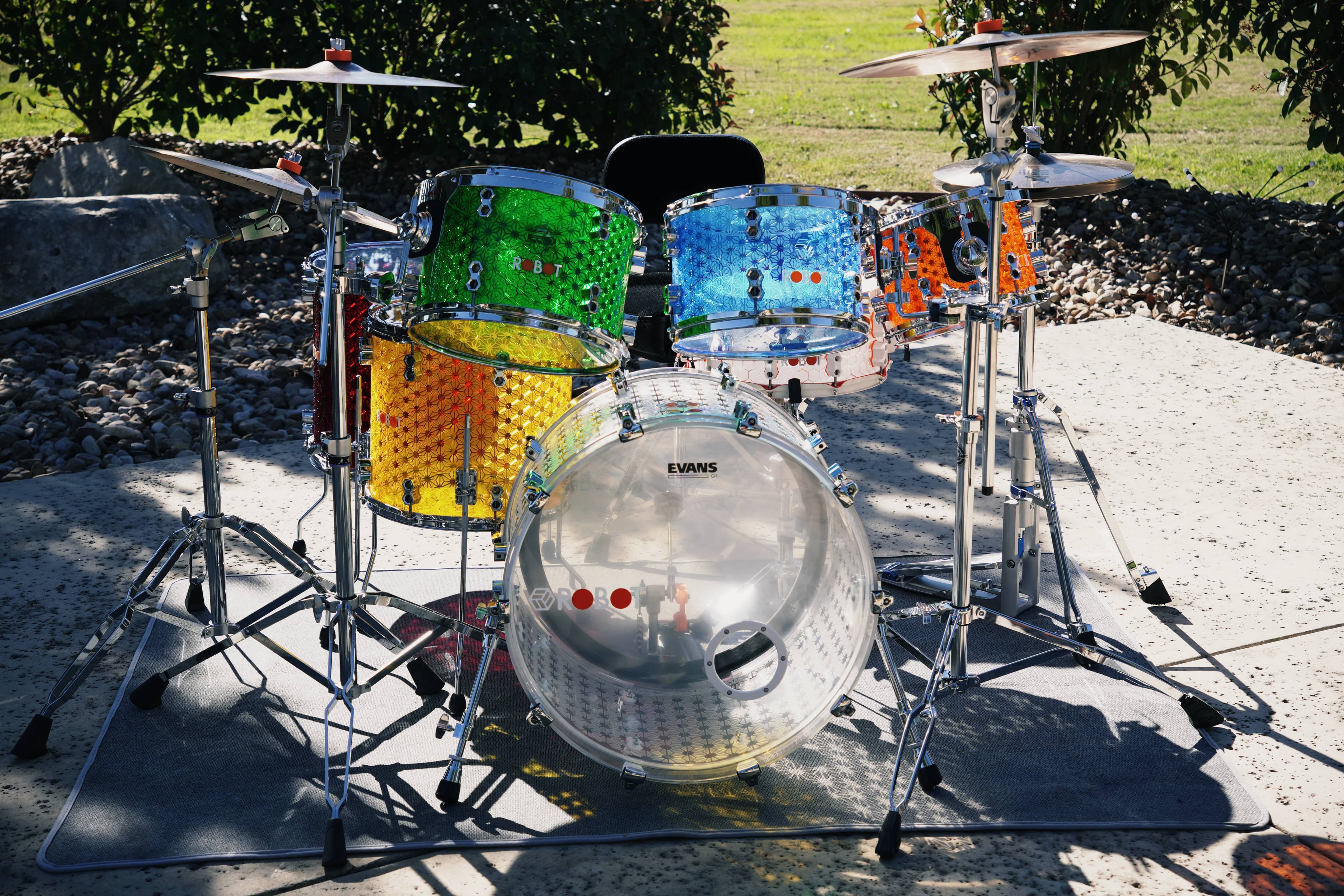
Building here keeps the feedback loop short. Design, production, and refinement stay close enough together that we can respond quickly when something needs to change.
It also keeps the knowledge in the studio. We are not just sending drawings out into the world and waiting for a result. We are making, checking, adjusting, and building a practice around that loop.
DrumBot is not a side tool. It is one of the reasons Robot exists.
It gives the studio the ability to manufacture its own language, rather than asking someone else to interpret it. That is what makes the company a design studio and a manufacturer at the same time.
Related object
An essay on the history, symbolism, and modern uses of asanoha, from textiles and crests to drum shells.
A technical look at membrane modes, shell resonances, and why we build lighter, more compliant shells with machined surface features.